Poland is a major industrial nation with a long history of impressive engineering achievements. They also have many rare, experimental, or one‑off machines created by individual engineers, adventurers and self-taught enthusiasts. A well-known glider constructor Władysław Okarmus put his name in the history of Polish aviation but also made a pretty interesting car.
Władysław Okarmus, born in 1922, had been fascinated by aviation since childhood. He began with model aircraft and eventually moved on to building gliders. After World War II, he became known as a gifted designer of advanced gliders, some of which even set world records. But this story is about a very different creation of his.
Beautiful cars on the dark side of the Iron Curtain were practically nonexistent. Poland was not part of the Soviet Union, but still suffered from shortages, including a chronic lack of automobiles. In the 1960s, Okarmus decided that a car was not much more complicated than an aircraft – and he certainly knew how to build aircraft.
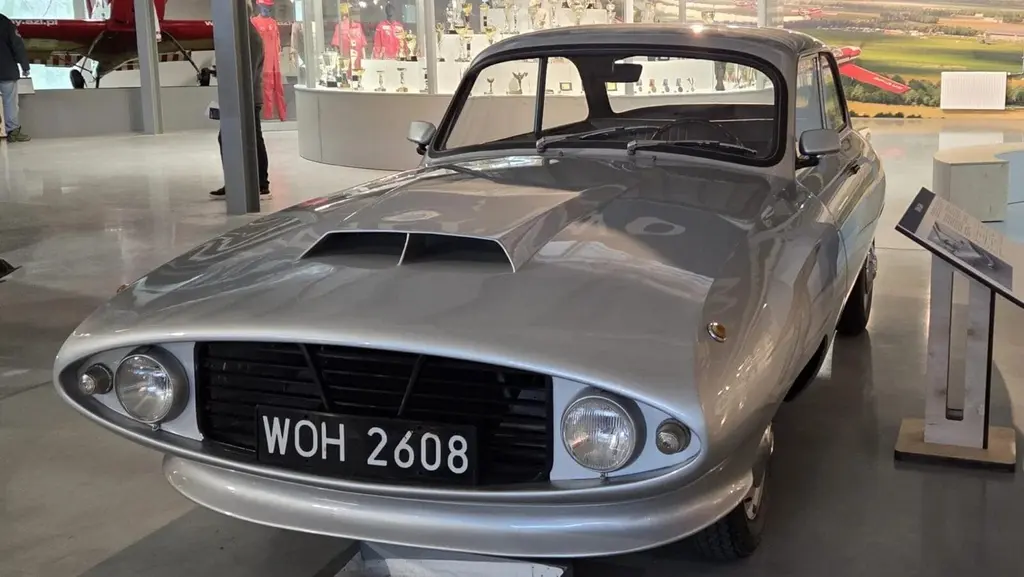
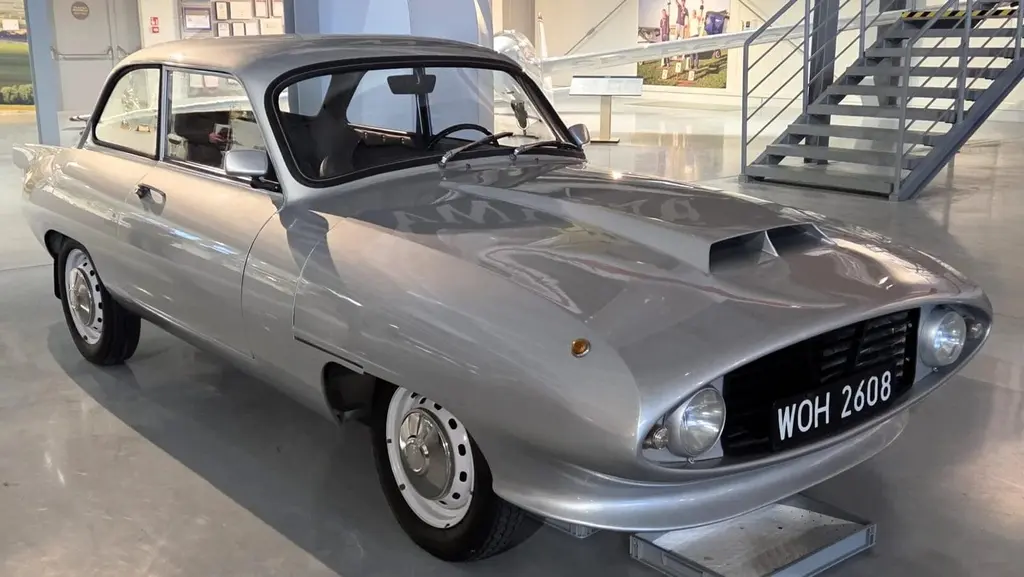
The foundation of Okarmus’s car was the chassis and frame of the interwar DKW F8. On top of it, he constructed a unique composite body using the same techniques employed in glider construction. The structure combined aluminum sheet panels (especially in the floor) with epoxy resin and fiberglass components. Drawing on his knowledge of aerodynamics, Okarmus shaped a sleek, flowing body while also paying close attention to aesthetics.
The silver DKW SAM features a flat, oval nose with recessed headlights and grille. A large body‑colored air dam sits below. The hood is enhanced by two prominent “nostrils,” giving the impression (more like an illusion) of a powerful engine hidden underneath. The entire front section – including the fenders, grille and headlights surround – is a single composite piece that tilts forward to reveal the engine bay.
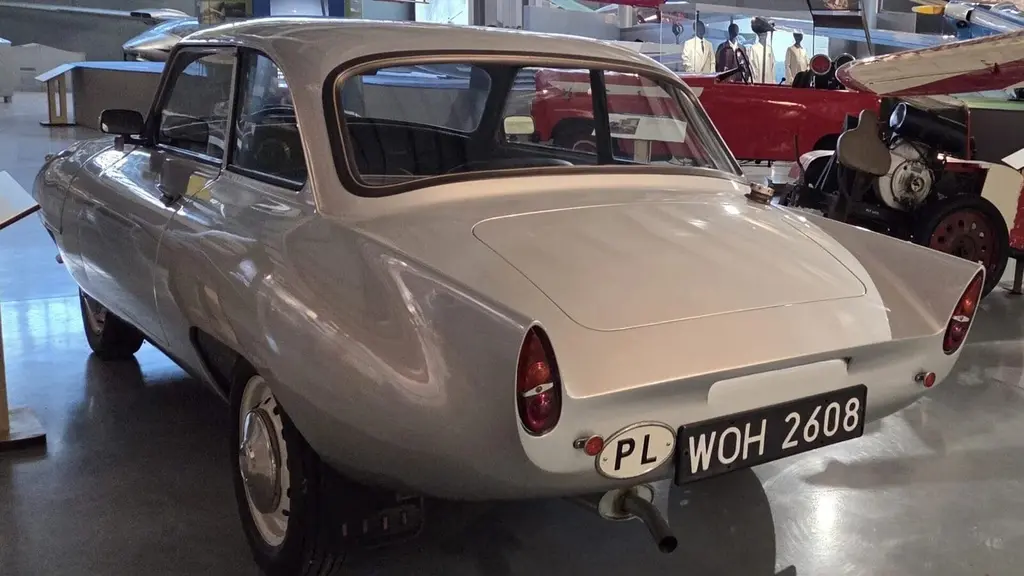
The flattened tops of the wheel arches enhance the car’s streamlined look and visually emphasize its horizontal dimension. Combined with the hood’s air intakes, the design gives the DKW SAM a sense of agility, even though it is not actually a sports car. It is just a beautiful, elegant coupe. The rear is enhanced with tailfins, a popular styling trend of the Space Age.
Okarmus worked on the DKW SAM for more than a decade, from the 1960s into the 1980s. The original DKW engine was eventually replaced with a Swedish SAAB two‑stroke, three‑cylinder engine producing 21 kW. The choice was fitting – SAAB, like Okarmus himself, had deep roots in aviation. Despite weighing just over 900 kilograms, the DKW SAM was not particularly fast, especially with five passengers aboard. Okarmus adapted many components from other Eastern European cars – a close look reveals parts from Škoda, Wartburg, Polski Fiat, and even Jawa.
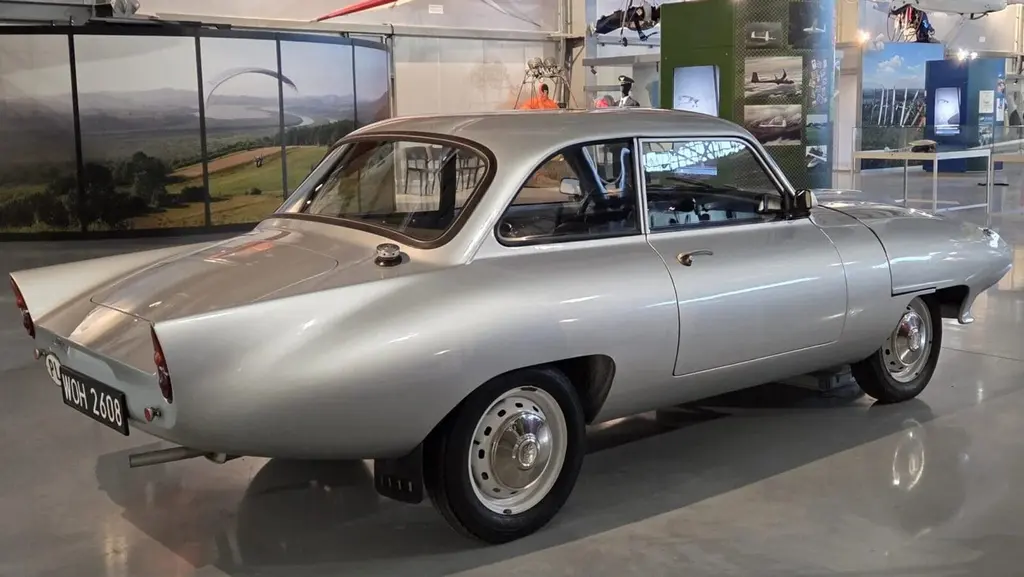
After Władysław Okarmus passed away in 1987, the DKW SAM remained in his family. It was later purchased and restored by collector Jacek Kowalewicz, and in 2023 it found its final home at the Polish Aviation Museum in Kraków.