Buses, like cars, continue to evolve, but we haven’t seen any dramatic changes in their overall design for quite some time. A brand‑new bus today looks surprisingly similar to one built at the end of the 20th century. Yet back in 1995, Volvo imagined a very different future for buses and trucks.
Volvo Buses and Volvo Cars are completely separate companies. Historically, both belonged to the larger Volvo Group, but in 1999 Volvo Cars was split off and sold to Ford. Today, Volvo Cars is owned by China’s Geely, while Volvo Buses remains part of the Volvo Group.
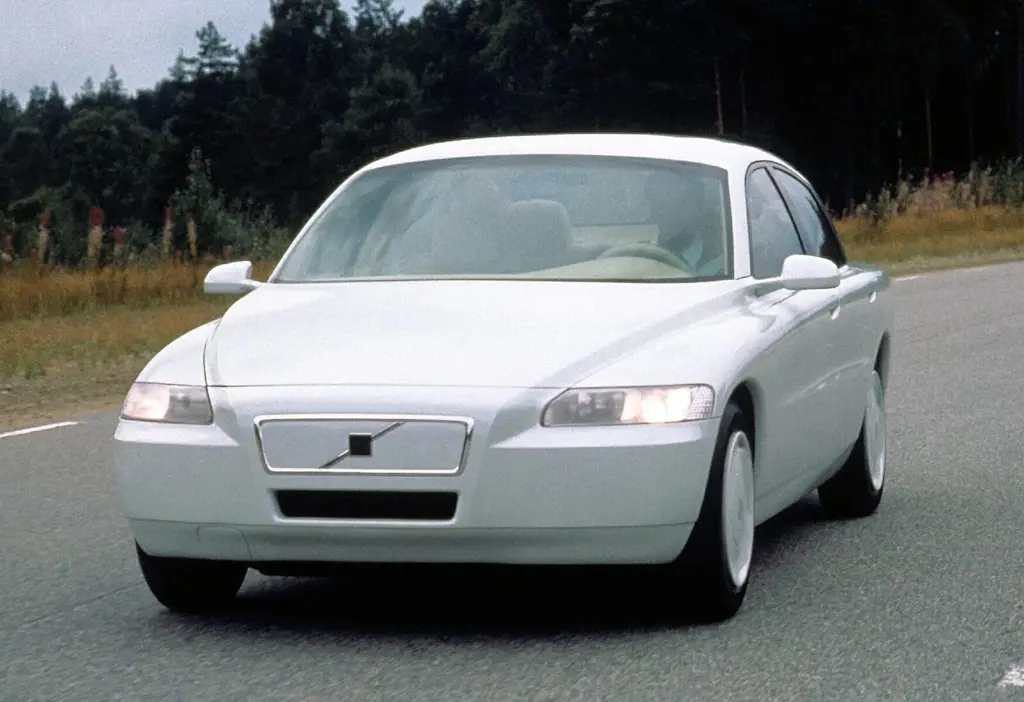
Before that separation, development of Volvo’s cars, buses, and trucks happened side by side within the same corporation. In 1992, Volvo unveiled the Environmental Concept Car (ECC), a showcase of what environmentally friendly personal transport could look like. And in 1995, it was time to present something similar for the commercial transport world.
That year, Volvo introduced two ambitious prototypes: the Environmental Concept Truck (ECT) and the Environmental Concept Bus (ECB). These weren’t mock‑ups or static showpieces – they were fully functional, one‑off machines that cost Volvo millions to build.
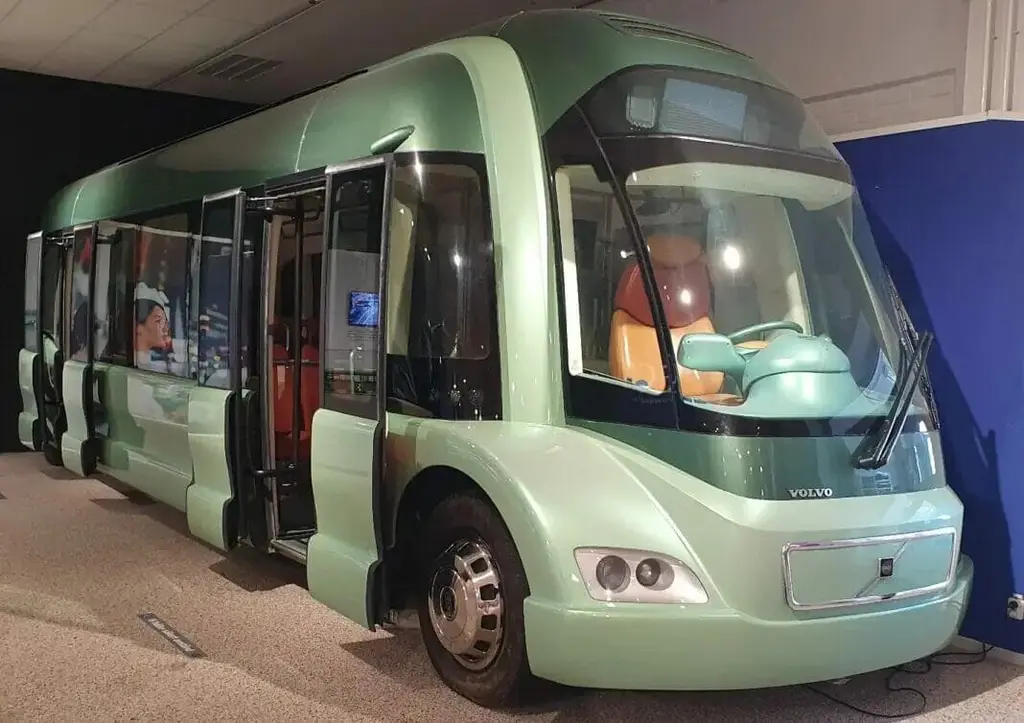
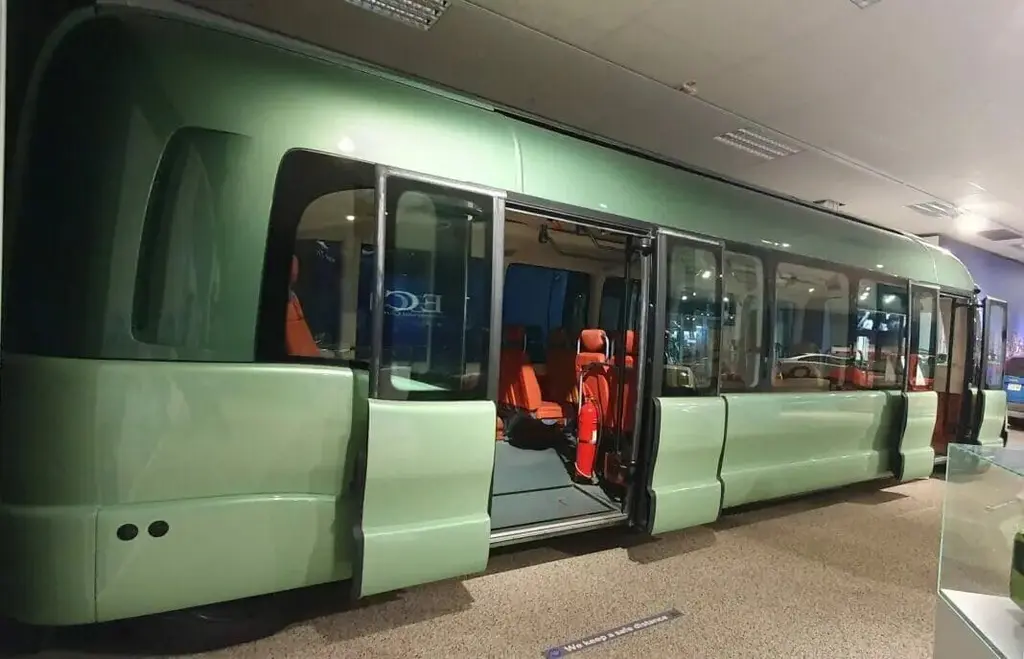
The low‑floor Volvo ECB featured a unique body made mostly from aluminum. Its core structure was a rigid safety frame, similar to a racing car’s roll cage, designed to protect passengers in a crash. The seats were mounted directly to this frame, and in the event of a rollover, an emergency exit in the floor would allow passengers to escape. Normally, evacuation from an overturned bus happens through roof hatches, but the ECB’s ceiling was packed with equipment.
The ECB placed the driver in a central seating position, allowing the front of the bus to be narrower and more aerodynamic. It also had no side mirrors– those were replaced by cameras. The focus on sleekness continued at the rear, where the back wheels were fully covered.
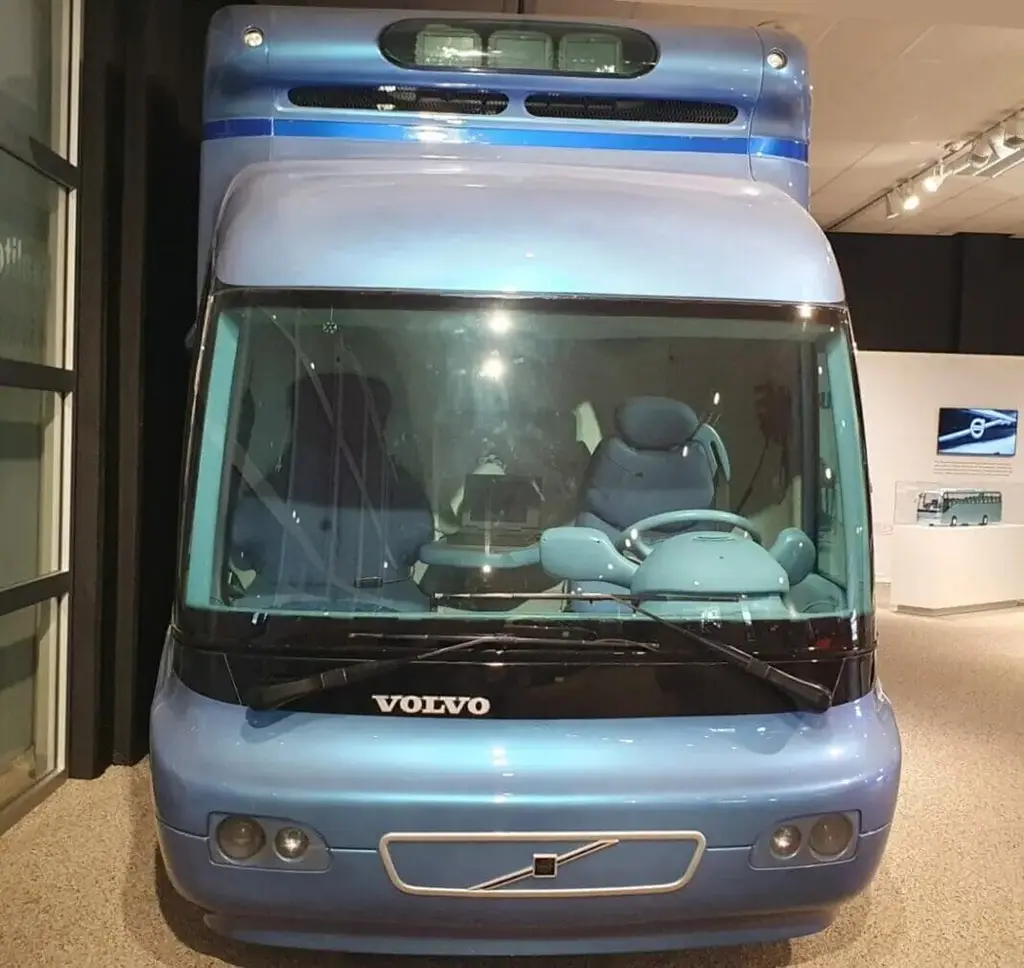
Interestingly, the ECT (truck) did not simply reuse the ECB’s cabin. Instead, it had its own two‑seat cab with a conventional driver position. Trucks often require a second crew member or need space for a passenger – something a single‑seat layout wouldn’t allow. Like the bus, the ECT had no side mirrors and featured carefully optimized aerodynamics. Both the ECT and ECB used nearly identical powertrains, shared with the earlier ECC concept car.
The ECT and ECB were powered by a hybrid gas‑turbine electric system. The turbine engine was compact and powerful, and most of the powertrain components were mounted in the roof to keep the floor as low as possible. This benefited bus passengers, cargo loading, and drivers – getting into the ECT or ECB was no harder than stepping into an SUV.
Unlike piston engines, gas turbines can run on a wide range of fuels and produce less noise and vibration. In these prototypes, the turbine acted solely as a generator supplying electricity to the traction motor. The vehicles didn’t carry large, heavy batteries, but they could travel short distances silently – useful for nighttime operation in cities.
Volvo also packed the ECT and ECB with other innovations: advanced LED lighting, extensive use of recycled materials, and early stability‑control systems. And importantly, these prototypes actually worked.
In 1996, the ECT and ECB appeared on the BBC’s Top Gear. Presenter Tony Mason called the ECB the most expensive vehicle they had ever tested, claiming it cost around £15 million. After driving it on the track, he compared the futuristic bus to the Starship Enterprise. Volvo engineer Kerstin Sterner later tempered expectations, noting that the prototypes were far too expensive for production.
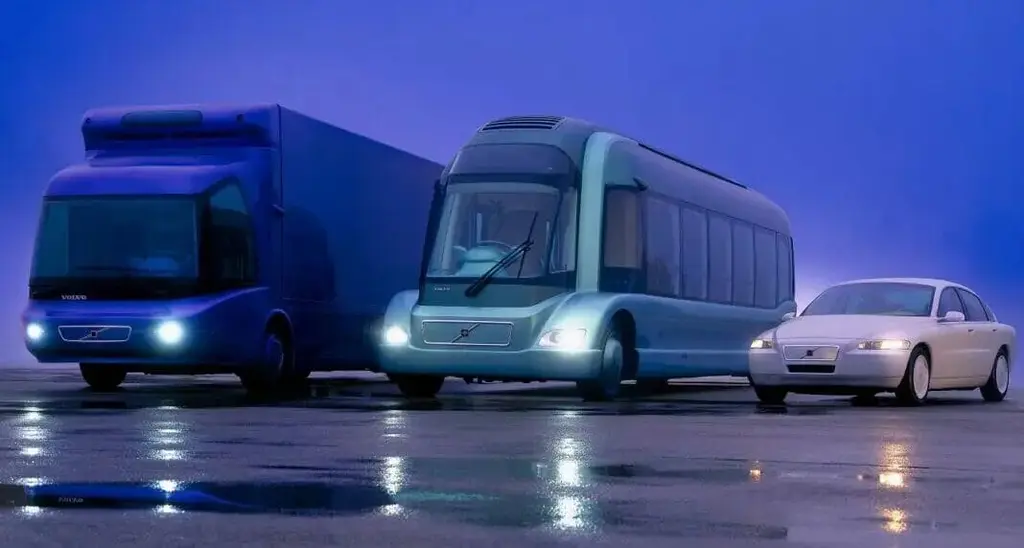
And indeed, they never reached the market. But several technologies and design ideas from the ECT and ECB eventually found their way into Volvo’s production vehicles. Today, the ECB bus and ECT truck stand as striking examples of forward‑thinking design – so advanced that it’s hard to believe they were created in 1995. Both prototypes are now preserved at the Volvo Museum in Gothenburg.