When you were a kid, you probably thought that airplanes should have parachutes. If all the engines failed, you’d just deploy a giant canopy and float safely to the ground. Later in life you learned the painful reality: no parachute big enough to land a Boeing 737 exists. And even if it did, it would be impossibly heavy, unwieldy, and still far from safe. But some airplanes do have parachutes.
Light aircraft can be equipped with ballistic parachutes. In an emergency, the system deploys a large canopy parachute and lowers the entire airplane to the ground. These systems are fairly common on ultralight and light planes, and they do save many lives.
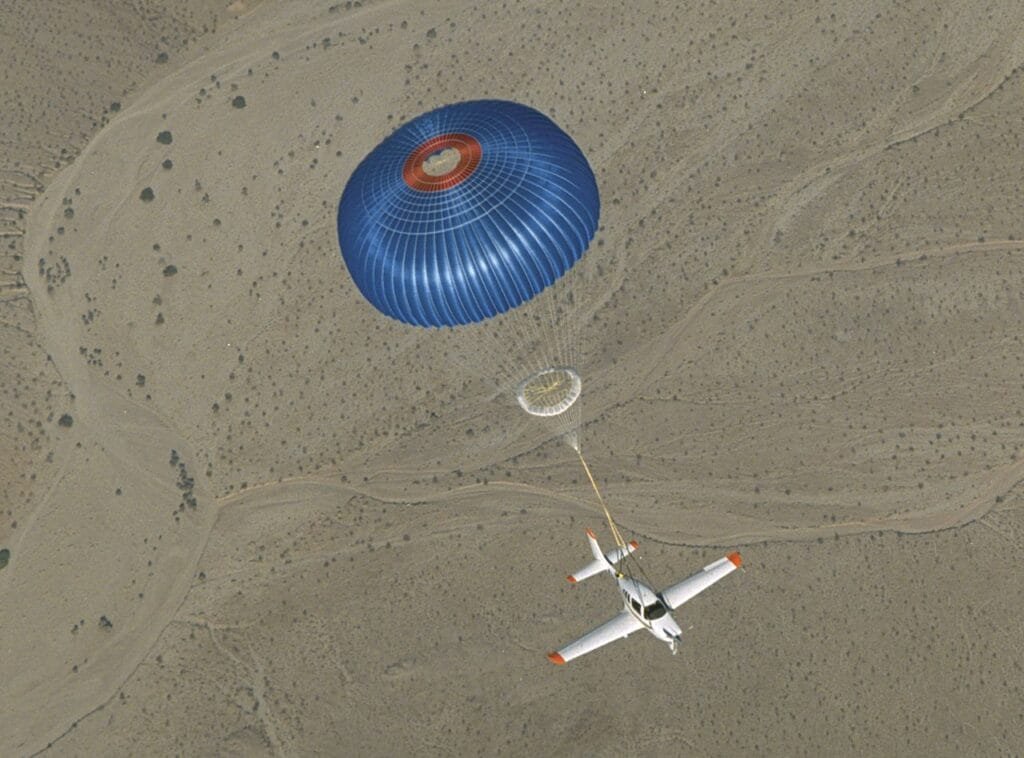
Whenever possible, a pilot will still try to land normally. They’ll extend the glide, looking for a suitable landing spot, and only pull the parachute if there is no safer option. Deploying a ballistic parachute is expensive, the system is single‑use, and the aircraft will almost certainly be damaged on landing. Of course, the cost doesn’t even cross the mind of the pilot when lives are on the line. Once the parachute is out, the pilot becomes a passenger — they can no longer steer away from trees, water, or power lines.
A ballistic parachute is packed into a relatively compact container sized for the aircraft’s maximum take off weight. It’s mounted where it can suspend the entire airframe. Deployment is triggered by a small rocket (yes, a rocket) that fires and pulls the parachute out of the fuselage. Because of this, rescue crews, crash investigators and technicians must treat unused ballistic parachutes with caution — a damaged but unfired rocket system can be dangerous.
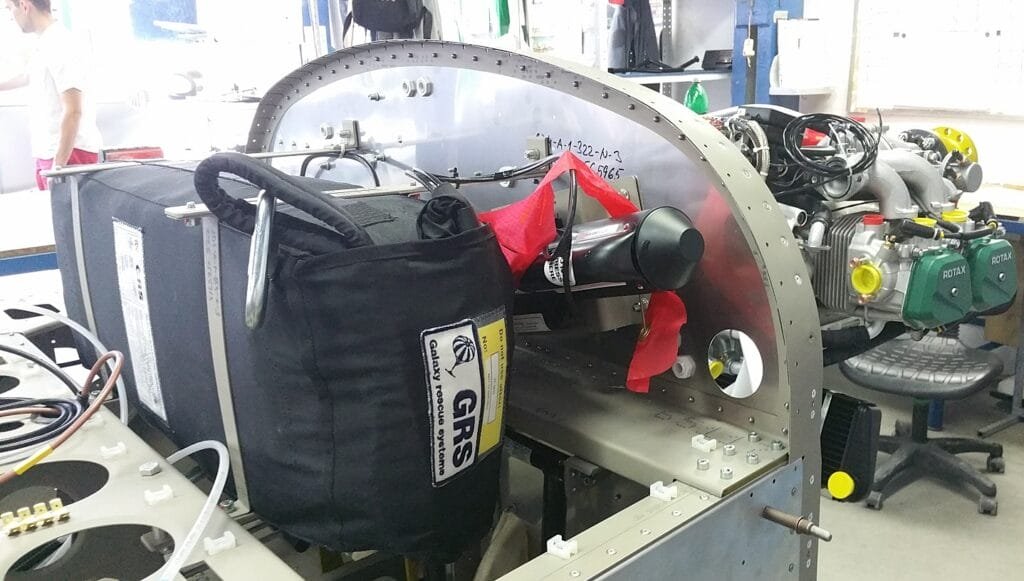
The parachute must deploy extremely quickly, even at low altitudes, and must be strong enough to support not only the aircraft and its occupants but also the forces created when the forward motion of the plane is suddenly arrested.
Ballistic parachutes entered aviation in the 1980s. In 1982, the German company Comco Ikarus installed one on a glider, and the technology soon spread to ultralight aircraft. More recently, ballistic parachutes have begun appearing on helicopters as well — the Italian two‑seat Curti Zefhir, which took off for its maiden flight in 2017, is the first helicopter equipped with a ballistic parachute.
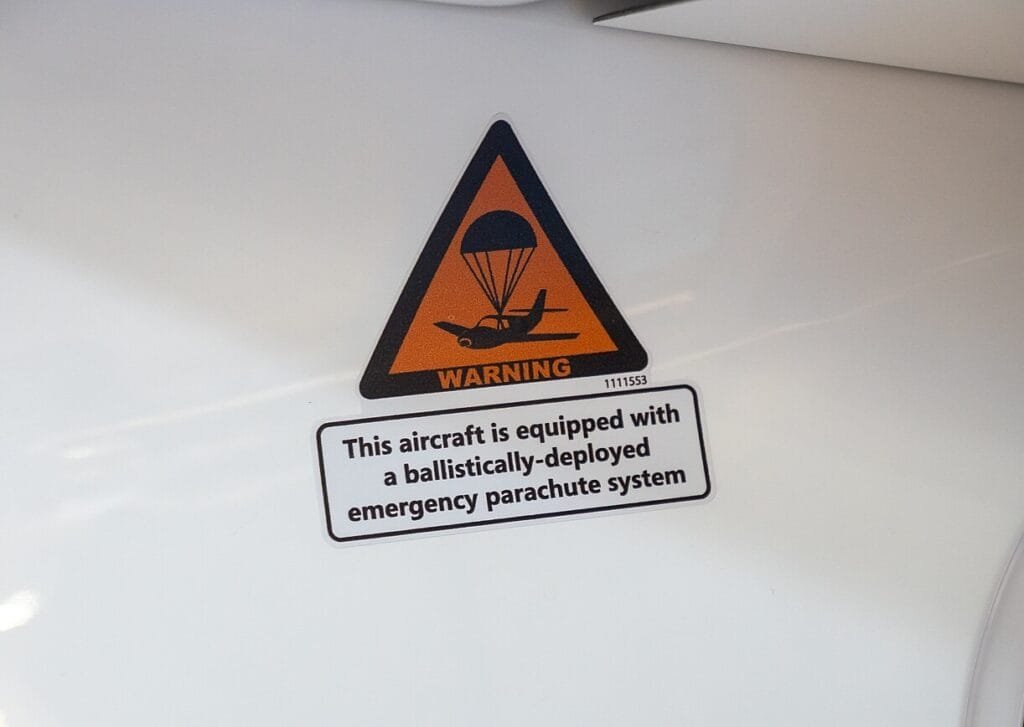
As materials and engineering improve, ballistic parachutes are being fitted to larger and heavier aircraft. The largest airplane with a ballistic parachute at the time of writing is the American Cirrus Vision SF50, in production since 2016.
The Cirrus Vision SF50 is an innovative business‑class jet. It is the world’s first certified single‑engine civilian jet aircraft; most light business jets use two engines, but the Vision does well with one, reducing cost and complexity. The aircraft is 9.4 meters long with an 11.8‑meter wingspan. Its cabin seats up to six passengers (including one child) plus a single pilot.
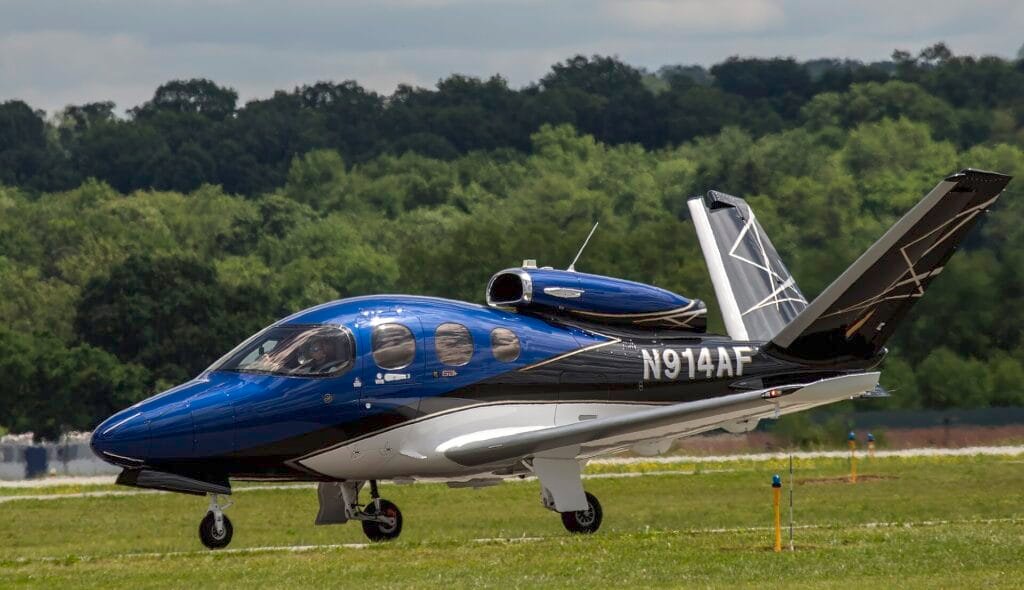
The Vision SF50 is also the first jet — specifically, the first turbofan‑powered aircraft — equipped with a ballistic parachute. Its maximum takeoff weight is 2,727 kg, and its parachute system has already been credited with saving multiple lives.
To deploy the parachute, the pilot pulls a handle in the center of the overhead panel. This fires the rocket, blows away several fuselage panels, and releases the parachute above the aircraft. The Vision descends with a slight nose‑down attitude, but the landing is surprisingly gentle.