Early passenger cars with internal combustion engines, built in the late 19th and early 20th centuries, were engineering marvels of their time. Today, it’s fascinating to examine their individual components up close. Their purely mechanical nature reminds us that humans themselves are more mechanical than digital. And, of course, these early cars also make us appreciate modern conveniences more. For example, can you imagine having to fill your headlights with water before a trip?
You might guess that the water was used to cool the headlights, perhaps because of the brass and glass construction. But that wasn’t the case. The water was needed for fuel.
People traveled at night long before cars existed. Horse carriages lit their way with candles and, later, by kerosene lamps. But soon after the invention of the practical internal‑combustion automobile, another important innovation spread rapidly: carbide (acetylene) lamps.
In 1892, Canadian inventor Thomas Willson developed a practical method for producing inexpensive calcium carbide. It took several more years for the process to be perfected and become industrially viable, but by 1900 the first calcium carbide lamp had already been patented. The earliest versions were intended for bicycles, but carbide lamps quickly became widespread in all sorts of applications. Miners, motorcyclists, and cyclists used them, and they even appeared in homes. And it is these lamps that required water to function.
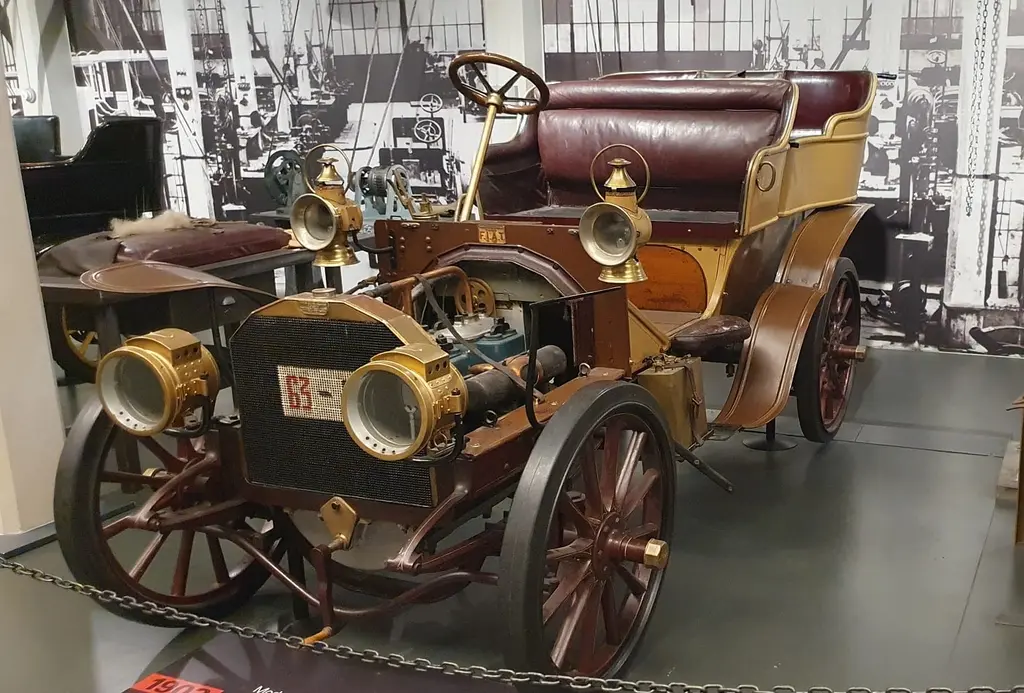
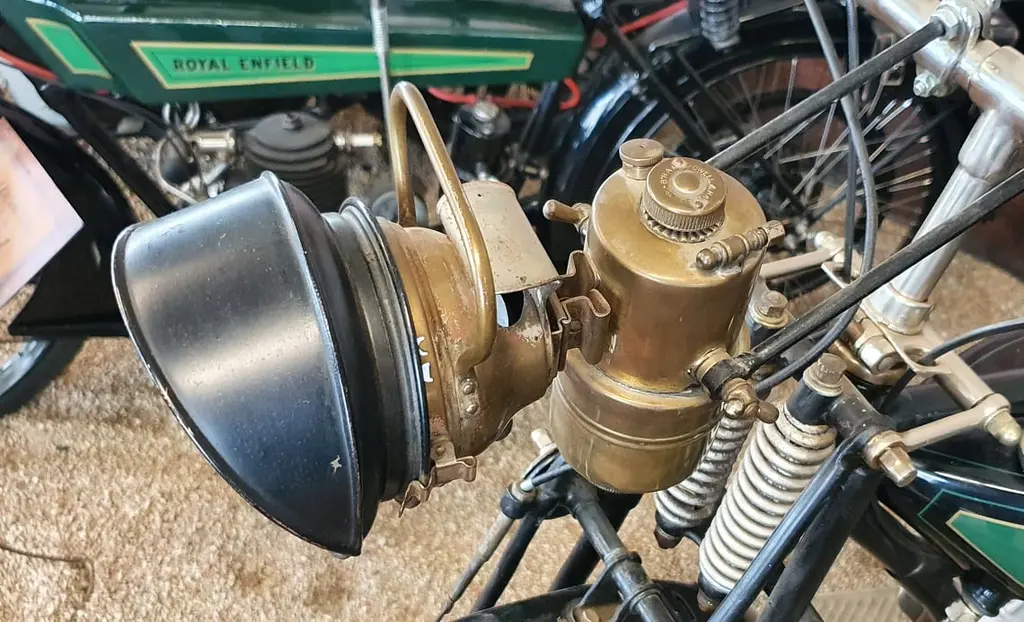
Calcium carbide (CaC₂) reacts with water to produce acetylene gas (C₂H₂), which burns with a bright, hot flame. A typical carbide lamp had two fuel compartments: calcium carbide in the lower chamber and water in the upper one. A small adjustable valve allowed water to drip onto the carbide. The faster the drip, the more acetylene was generated.
The resulting gas was fed to a burner behind the lamp’s glass. Higher‑quality headlights had lenses and reflectors to improve efficiency. Early cars typically had three to five such lamps, each of which had to be lit manually.
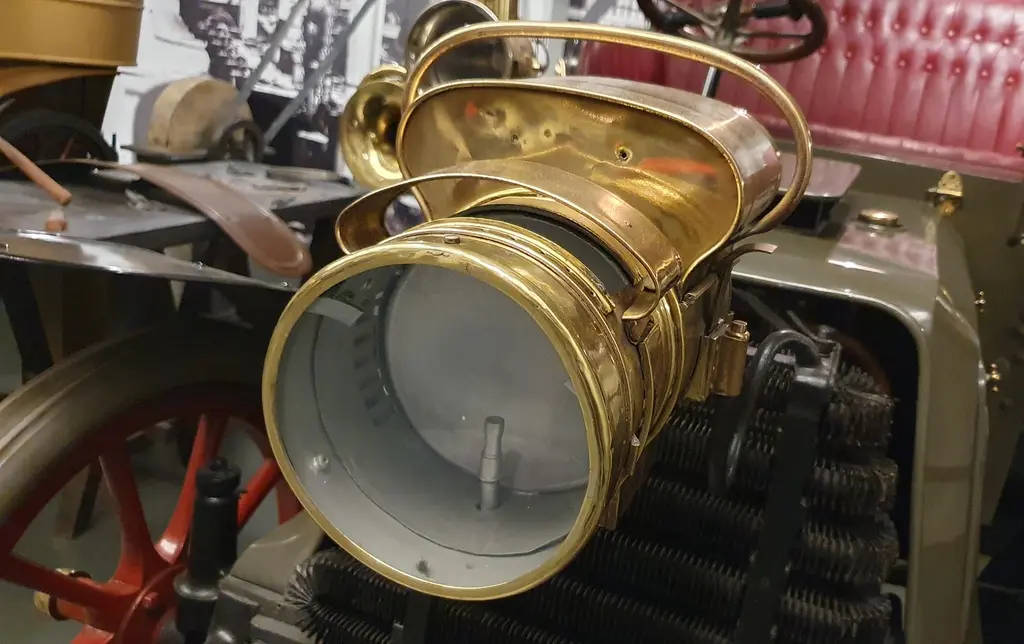
Lighting a carbide headlight required care, because it could be dangerous. First, the driver opened the glass front and cracked the valve so water could drip onto the carbide. As acetylene began to flow through the burner, driver carefully – keeping his face as far back as possible – held a lit match to it. Once the flame caught, the lamp could be closed and the brightness could be adjusted with the valve. After the trip, the flame had to be extinguished and only then the valve could be closed; doing it in this order kept the burner cleaner than shutting off the water supply first.
Carbide lamps required regular maintenance. Both the carbide and water compartments had to be regularly refilled. Every part of the lamp needed regular cleaning – and each car had two or three of these lamps, sometimes even five!
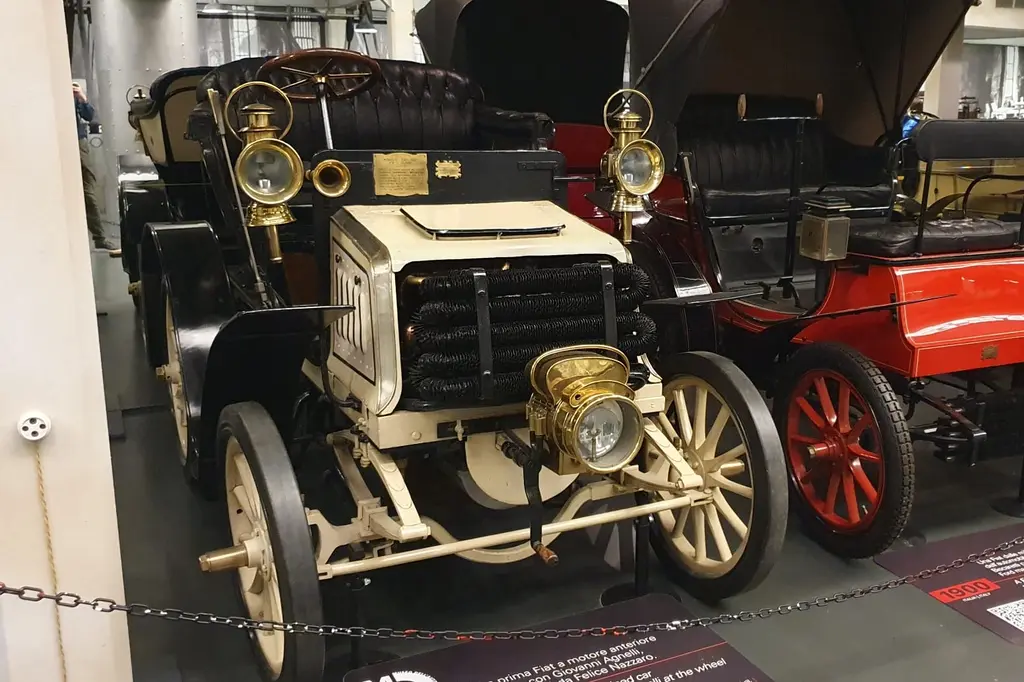
Acetylene lamps were not especially bright. They were certainly better than kerosene lamps, but they still didn’t illuminate the road very well. And they also required careful attention. Once batteries and generators made electric lighting practical, electric headlights quickly replaced carbide.