A modern main battle tank can weigh 60 tonnes or more. These are extremely heavy, powerful machines. Yet in peacetime they often have to travel on public roads for training or logistical maneuvers. How do tanks avoid destroying asphalt that we all use every day?
Although this article focuses on tanks, the same principles apply to all heavy tracked military vehicles. Tanks do appear on paved roads from time to time – usually during exercises or when units are being moved from one base to another – and every time they do, people worry about road damage.
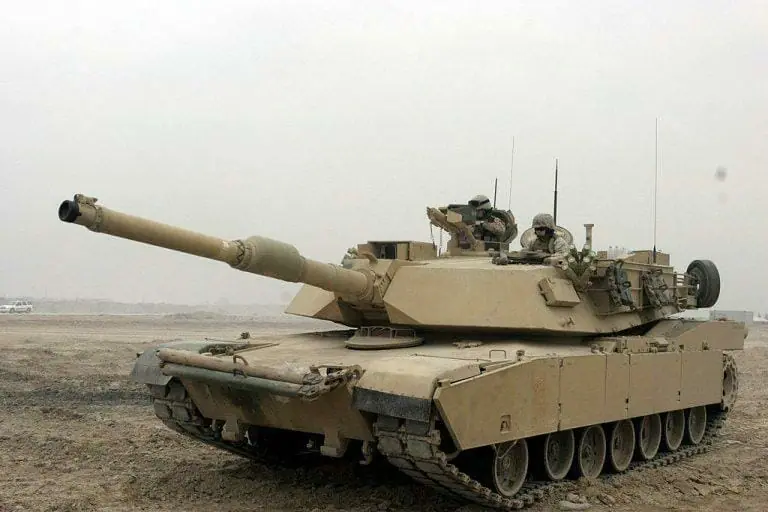
Do tanks wear down road surfaces? Yes. Everything that drives on a road contributes to its wear. Buses, cars, trucks – they all chip away at asphalt over time. But the damage caused by main battle tanks is much smaller than many people assume.
Military vehicles are only useful if they can move. If tanks tended to sink into the ground, they wouldn’t be very effective. That’s why they use tracked chassis. Long, wide tracks spread the tank’s weight over a large area, resulting in surprisingly low ground pressure. A Leopard 2, for example, exerts only about 0.8 kg per square centimeter. Add-on armour or extra fuel can increase its ground pressure slightly, but even then a commercial truck squeezes the ground eight to ten times harder because its tires have a much smaller contact patch. In fact, even an ordinary passenger car has higher ground pressure than a main battle tank. After all, tanks can drive across fields where cars would immediately get stuck.
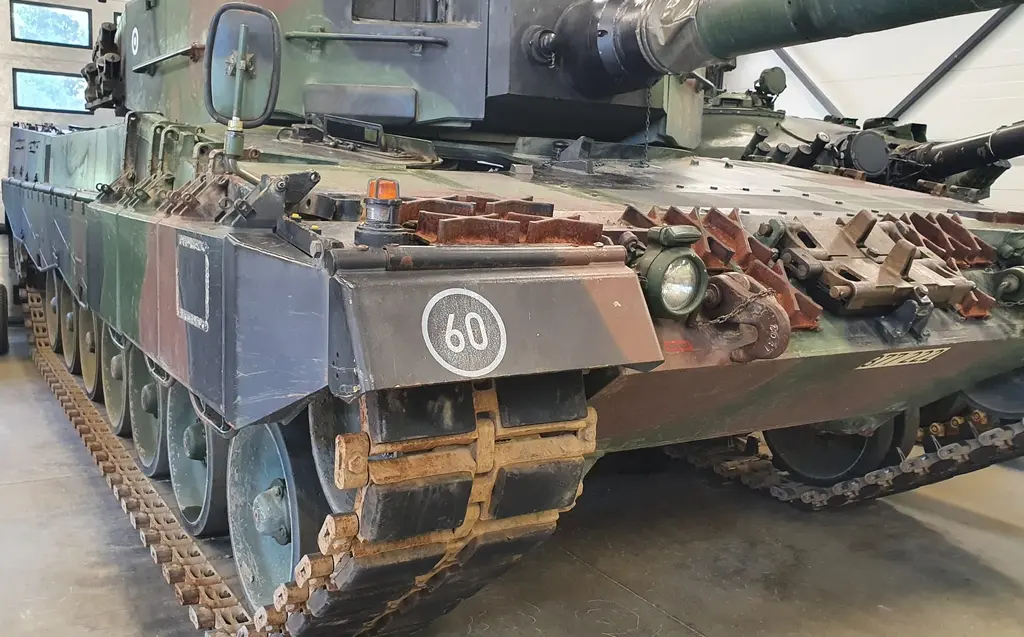
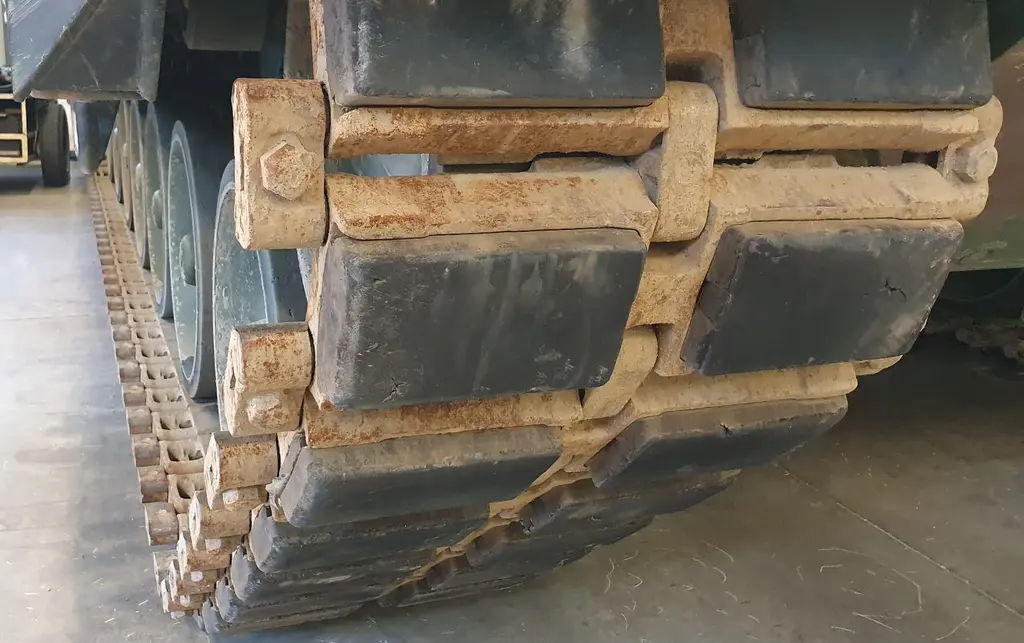
Modern main battle tanks also have advanced suspension systems that absorb bumps and adapt to uneven surfaces. And their tracks are fitted with rubber pads that protect the road as well as improve traction on hard surfaces. Without those pads, the steel track links would crush and gouge the road. When needed, the rubber pads can be swapped for steel inserts to improve traction off-road.
At this point, it might sound like the story ends here: tanks don’t damage asphalt because their ground pressure is low. But that’s only part of the truth.
Ground pressure describes vertical force – how much a vehicle presses directly downward. Tanks don’t cause much trouble in that direction. But tracked vehicles also exert shear force – sideways scraping – because their tracks stretch, flex, and slide slightly as they move. Asphalt is far less resistant to shear than to vertical pressure. This sideways action does accelerate wear, even with rubber pads helping to reduce the effect. That’s why tracked military vehicles generally avoid paved roads when possible. In some cases, roads are protected with temporary coverings such as large rubber mats, wooden boards, pallets or other things.
It’s important to remember that asphalt is a consumable surface – built with the expectation that it will eventually need repair or replacement. Roads exist for the economy, for the movement of people, and for national security. Wear is just part of the deal.